- Vancity Lookout
- Posts
- CMHC interview
CMHC interview

Geoff Sharpe
January 12, 2026
Good morning,
Last week, we ran a story on Vancouver’s vacancy rate and its impact on rental prices. Anyone looking for a home will have noticed a significant number of rentals on the market, along with what appear to be lower prices.
But here’s the thing — that’s just an observation, and with all things, actual data matters. Today’s story digs more deeply into the vacancy rate’s impact on rental prices with someone at the heart of data measurement.
I won’t spoil it anymore, let’s dive in!
— Geoff Sharpe, Lookout founder and managing editor
PS - If you find this newsletter valuable, please consider forwarding it to your friends. New to the Lookout? Sign-up for free.
WEATHER
Monday: 10 🌡️ 9 | 🌧️
Tuesday: 12 🌡️ 6 | 🌧️
Wednesday: 8 🌡️ 5 | 🌤️
HOUSING
What a higher vacancy rate really means for Vancouver renters

By Julie Chadwick
Last week, we ran a piece on the rise of Vancouver’s rental housing vacancy rate to 3.7 per cent for 2025, its highest rate since 1988, according to the Canada Mortgage and Housing Corporation’s latest rental market report.
So what does that mean for renters?
Despite the lower vacancy rate, over the last year the average rent for a two bedroom apartment in Vancouver still went up by 2.2 per cent and sits at $2363 per month, according to the CMHC’s latest numbers.
However, the recent Canadian Rent Report from online rental service Zumper, which aggregates rental data from hundreds of thousands of current listings to calculate median rents, suggests a more complex picture. Overall, its data states that Vancouver rents have gone down by about 6 per cent annually for both one and two-bedroom units.
The data from rental companies and current listings can sometimes offer a different picture of current rental trends as it is focuses on units presently for rent, rather than including data on long-term rental units.
“When I compare our internal active listing counts in Vancouver for December 2024 versus December 2025, our listings grew by nearly 20 per cent year-over-year,” says report author Crystal Chen, via email. “I think both of those data points together show how the influx of new supply in the city has really helped bring down rates.” However, Chen also points out that Vancouver is still the priciest rental market in Canada, according to their data.
Vancity Lookout spoke to Shiva Moshtari, CMHC’s lead economist for Metro Vancouver and Victoria to find out more about how the vacancy rate might affect the current situation for renters.
Note: This interview has been edited and condensed for clarity.
Julie Chadwick, Vancity Lookout: What is the significance of the vacancy rate changes specific to Vancouver?
Shiva Moshtari, CMHC: This year's report demonstrated an increase in vacancy rates from 1.6 per cent last October to 3.7 per cent this year, which was the highest vacancy rate for the past 30 years.
A few things about that increase. We've seen record levels of housing starts that started a few years back, right after the pandemic, which translated into record levels of rental additions or rental completions this year. So a surge of supply of new rental units is one factor on the supply side.
On the demand side, we had the change in immigration policy, the federal changes in non-permanent residents, both being foreign workers as well as students, who are mainly renters.
So that lowered demand for these rental units, as well as a weaker labor market throughout the year, especially for youth unemployment, which indicates that mostly young professionals and youth who are ready to get into the rental market and out from their parents home or co-living arrangements, have probably decided to stay in their current conditions and avoid coming out and demanding those studio and one bedroom-type units.
These together — the combination of higher supply as well as lower demand really was the case for higher vacancy rates this year.
Vancity Lookout: I heard there was a lot of building going on, but that not a lot of it was affordable housing. How do you explain that? Does a surge of supply still affect things, even if it’s expensive supply?
CMHC: We do say in our report that affordability still remains a challenge, despite these units being added to the rental market, and mostly that's because of the challenges that the development industry has been going through, like increasing costs and delays in supply chains.
There are lots of different factors, you can't identify one single reason, but as a result it means that newer rental units are at higher price points in terms of rent, which doesn't completely address the affordability challenges that exist for tenants right now.
However, over time, we see that, for example, households with a need to upsize that can afford to move up to those newer units as a result of rent growth decreasing, it frees up some of the units and lower income families can benefit from that. We call that a filtering effect, which is a longer-term thing to look at, but short term, unfortunately, affordability is still a challenge.
Vancity Lookout: What type of units are becoming more available?
CMHC: Mostly because of youth unemployment, what we are seeing is studios and one bedroom units becoming more vacant. We still have an increasing demand for two or three bedroom-type units, which are still in high demand.
With regards to the supply, it's also a matter of the right supply to be added. So we probably need to see more family-friendly units, like two and three bedroom-type units to be added to the market for households with kids, or if people prefer to live with roommates. Those types of units are more in demand because they’re also more affordable, because they can share the cost.
Vancity Lookout: Do you know why there might have been such a quick change to the vacancy rate within one year?
CMHC: There is not just one factor. An increase in supply takes time. It's not an overnight thing. When we start building a building, it takes a few years for that whole building to be completed. However, changes in immigration policy — we saw three consecutive quarters of outflow of non-permanent residents just this past year — it was a faster thing happening compared to supply being added to the market. That's why we see that happening just this year, because it was not a normal year.
Vancity Lookout: Other than international students, was there a reduction generally in people moving to Vancouver from elsewhere?
CMHC: B.C. this past year has seen an outflow of non-permanent residents internationally, as well as interprovincially, to our neighbouring province of Alberta. So we see that outflow happening as well, mostly due to cost of living and job opportunities, and that's also something that we're seeing, yes.
Vancity Lookout: How do vacancy rates affect the market for renters?
CMHC: Vacancy rate refers to a unit being vacant, so there is no tenant living in that unit, and that unit is subject to market rent. As a result, we calculate the vacancy rate, but it's just not that vacancy rate that describes how the rental market is doing.
When we look at average rents, or vacant-versus-occupied rents, we see some changes there too. As an example, this year we still saw an increase in average rent. Average rent refers to an average of all rents — in occupied, vacant and turnover [units] — it was just an increase of 2.2 per cent which was lower than the maximum allowable increase for the province, meaning that a lot of existing tenants also did not have their rent increased this year.
When we look at turnover rent for this year, for example, we see a decrease, which means that when units become vacant and available for new tenants, that asking rent is decreasing since last year. So that is also showing the rental market is softening, and there is a decrease that we are seeing in available units being offered to potential new tenants.
But overall, to look at these two measures is a better combination to see how the rental market is doing. Average rent is still increasing, but at a lower rate. Asking rents are decreasing, which shows the rental market is softening. A lot of new landlords are offering cash incentives of free months of rent or non-cash incentives — I've heard of Amazon gift cards, free parking, free lock carriers, things like that — to attract tenants to avoid the cost of their units being vacant.
These incentives are something that was interesting to see. A lot of landlords are being creative. They're trying to minimize their cost as much as they can. It's of benefit to potential tenants to have negotiating power to get the best rates, and they now have more options in terms of selecting the unit and offering them the best incentives, as well as meeting their needs.
Vancity Lookout: What else have you seen in the rental market that you found interesting?
CMHC: Just that the vacancy rate increase was not only specific to the newer units this year, it was across all types of units — older, existing, and new units were increasing this year. So although those older-type units are still in very high demand because of their lower rent, we still saw that in those types of units, vacancy rates also went up. This is because that filtering effect happening over time helps some of those existing units become available for lower-income households.
Vancity Lookout: Do you expect to see this trend continue?
CMHC: Our forecast will be published early this year. However, I think we expect this trend to continue for this year as well, because we are still seeing completions happening and that immigration policy still is tight, so we are still expecting to see vacancy rates softening.
Comment Corner
Have some thoughts on this story? Want to share some insight with the Lookout community? Share your opinion in our Comment Corner and it could be featured in future newsletters.
THE VANCOUVER NUMBER
5,800
That’s the number of hotel rooms in development in Vancouver, encompassing 29 different hotel projects. The number is partially due to the city identifying a shortage of hotels, including a 90 per cent hotel occupancy rate during peak travel rates. Anyone who has friends who visited Vancouver has probably heard their complaints about prices! Read more. [Vancouver is Awesome]
THE AGENDA
⛈️ Yes, it’s been rainy over the last few days, and unfortunately, it’s expected to continue until Monday night, with 150 mm of rain expected to have fallen through yesterday and into today.
📉 There’s been a major shift in key stats in Vancouver — for the first time in ages, safety, drug use, home prices and rental rates have all dropped. As CBC reporter Justin McElroy noted, ABC is trying to take credit for these trends, while opposition councillor Sean Orr is questioning who is actually responsible for those changes. Read more. [CBC]
🚧 Prepare for more construction on Broadway. Between Main and Quebec on Broadway will be closed to vehicle traffic starting on Jan. 26 and continuing for four months. Buses and traffic will detour using East 8th Avenue, while businesses and sidewalks will remain accessible. Two-lane traffic is expected to return by the summer. Read more. [CTV]
❌ Meanwhile the head of the Mount Pleasant BIA says that the Broadway road closure will mean that businesses in the area will struggle to survive, and that the province should step in to provide financial support for those businesses. Read more ($). [Vancouver Sun]
🏥 Vancouver Coastal Health is expanding its hospital-at-home program. The idea is to free up bed space by providing patients with more care at home before and after surgery. Read more. [CBC]
👎️ CUPE Local 15, which represents more than 4,000 employees who work at the city, has filed a labour complaint that the city withheld information during bargaining, thereby violating the labour code. The union says management knew about planned worker cuts ahead of time, which should’ve been disclosed. Read more ($). [Vancouver Sun]
🪧 It was a weekend of protests in Vancouver. On Saturday, hundreds gathered at the Vancouver Art Gallery to rally against the Iranian government's crackdown on protesters, while around two dozen met at the U.S. consulate to protest the crackdown by ICE south of the border. Read more. [CTV]
🏒 It’s not looking great for the Canucks these days. The team lost in humiliating fashion, 0-5, against the Maple Leafs. To make matters worse, Thatcher Demko was placed on injured reserve after suffering a lower-body injury, while allowing three goals on six shots.
🏒 The Goldeneyes lost to the Montreal Victoire 1-0 on Sunday. The team sits in last place in the PWHL standings, with a 3-1-1-17 record.
VIDEO OF THE DAY

One of my favourite YouTube accounts, About Here, has a new video out on North America’s elevator problem. One interesting way to think about elevators is that they are in many ways as important as highways, given that they enable taller and taller buildings. Have a watch!
EVENT GUIDE
Spectre in Concert | The Orpheum | Jan. 14-15, 7 p.m. | Come see one James Bond on the big screen accompanied by a live orchestra | Tickets $49+
MENA Film Festival | Vancouver Playhouse and VIFF | Jan. 15-23 | Over 40 different movies and films featuring films from the Middle East and Africa | Tickets various prices
UBC Windfest | UBC Music Building, 6361 Memorial Rd. | Jan. 25, 9 a.m.-6 p.m. | Workshops, masterclasses and performances for anyone interested in wind instruments | Tickets $30+
Shoresy Classic | Rogers Arena | Jan. 26, 7 p.m. | Come watch the cast of the popular Canadian show Shoresy compete against NHL alumni, with partial proceeds donated to charity | Tickets $48+
The Bike Share Dilemma: Why Vancouver Needs a Regional Bike Share | MONOVA: Museum of North Vancouver | Feb. 3, 3:30 pm | Tickets $75
Vancouver Magazine Power 50 | Terminal City Club | Feb. 5, 5:30 p.m. | Come see who topped the list of changemakers in Vancouver | Tickets $231
Said the Whale Anniversary Tour | Hollywood Theatre | Apr. 11, 7 p.m. | Millennials will want to see this performance! | Tickets $53+
The Price is Right Live on Stage | Orpheum Theatre | Apr. 1, 8 p.m. | Come see a live performance of the popular game show | Tickets $57+
Submit your event and it could appear here and reach 30,000+ Vancouver locals.
FROM THE ARCHIVE
Scientists and experts raise concerns over impacts of dredging the Burrard Inlet

In mid-September, the Vancouver Fraser Port Authority (VFPA) launched a new website outlining its plan to dredge Burrard Inlet, east of the Second Narrows. The website confirms that the work to remove sediment from two locations in the inlet remains in a “preliminary stage,” including First Nations consultation and early field studies. It also sets a clear expectation: dredging could begin in 2026.
The proposed project has raised concerns among scientists and experts about the lack of study on harmful impacts resulting from dredging, and whether there is independent oversight in place to manage and mitigate the risks.
NEW VANCOUVER JOBS
Discover your new dream job in Vancouver:
Marketing advisor at BC Hydro
Director of partnerships at FreshBooks
Corporate and commercial paralegal at Digby Leigh & Co
Director, residential sales and leasing at Townline
Events and experiences manager at LayerZero
GOOD NEWS MONDAY
Here’s a good news story to start your week:
Vancouver General Hospital’s Dr. Stefan Lang is leading new research to help those suffering from the cognitive side effects of Parkinson’s. While they aren’t treating the motor skill symptoms of the disease, they are using brain stimulation to help improve cognitive decline, including anxiety and depression. Read more ($). [Vancouver Sun]
COMMUNITY HIGHLIGHTS
Congrats to Vancouverites Seth Rogen and Evan Goldenberg who won a Golden Globe for The Studio (a show absolutely worth checking out).
The Vancouver Aquarium is getting a new exhibit featuring Axolotls! [CBC]
I love to see new grocery stores open, and this new Spanish one at 698 West 16th Ave. is a welcome addition. [Vancouver is Awesome]
VANCOUVER NEWS QUIZ
How long is part of Broadway at Quebec expected to be closed for? |
PHOTO OF THE DAY
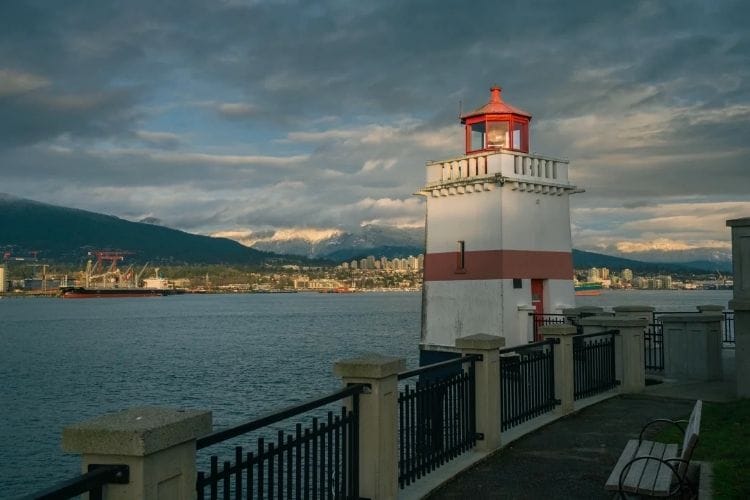
Here’s a soothing picture of Vancouver during a sunset.
What did you think of today's newsletter? |